Hand painted ceiling supports from exterior "porch."


Unusual ceiling details,


Windows and doors (note tile surrounds):


Exquisite tile work is common throughout the palace, including the interiors of domes.


Interesting baluster detail.


John
Hand painted ceiling supports from exterior "porch."
Unusual ceiling details,
On the second full day of touring on my trip to Istanbul, we visited the city's Modern Art Museum and two additional mosques, the Mosque of Suleyman the Magnificent and the Rustem Pasha Mosque.
Istanbul Modern Art Museum.
Here is s view of the museum taken on our cruise on the Bosphorus later in the week.

In some ways the museum was an unusual choice, as Istanbul is best known for its older architecture, not its contemporary art. Still, I thought there were some interesting pieces that I photographed.


One of the largest and most beautiful mosques was the one built for Suleyman the Magnificent, completed in 1557 CE. It was designed by Sinan, the architect who also designed the Blue Mosque and the Rustem Pasha Mosque.
First, the exterior, including one of the four minarets, as well as the detail of the archway over the main entrance to the mosque.


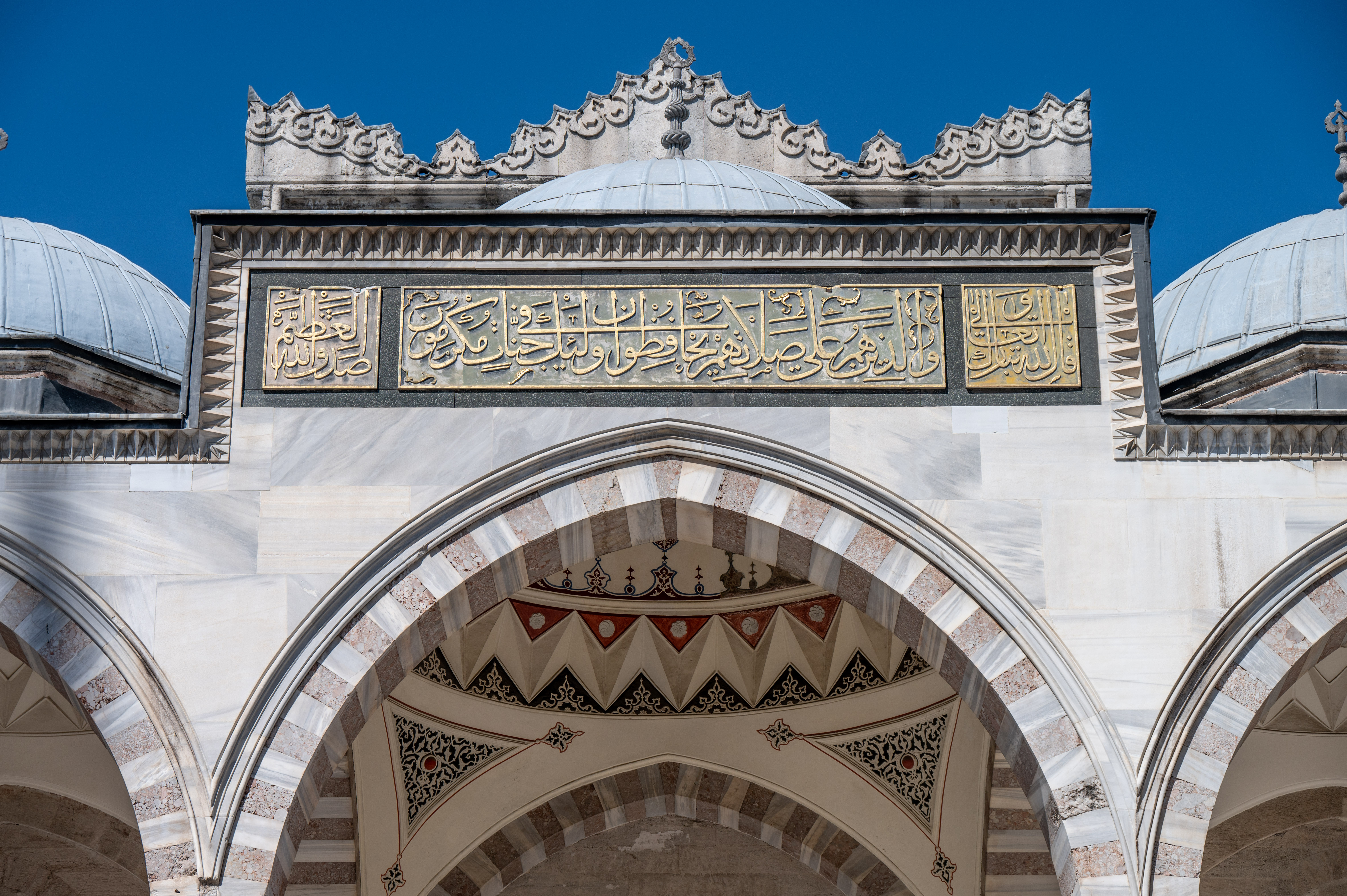
And here is another photo of the intricate detail over another of the entrances.


A ceiling detail.

On the exterior there were areas where worshipers can perform ritual ablutions before entering the mosque for prayer.

The Rustem Pasha Mosque was smaller than the others that we visited, though it was by no means small in an absolute sense. For me, the best aspect of this mosque was in the beautiful Iznik tiles that largely covered the interior.


Here is a shot that features some of the tiles on the interior.

I particularly liked the doors and windows of this mosque (despite the fire extinguisher in this first shot).


These last two were of the same window, one taken straight on, the other at an angle.

John
In September I spent a week in Istanbul, Turkey, along with 11 other travelers on a tour run by Road Scholar. Here are some photos from my trip.
View from Hotel.
Our hotel was located in what is known as the New District, which is separated from the Old City by an arm of the Bosphorus known as the Golden Horn. Here are a few photos from my hotel room which looked to the south and the Old Town, including a couple of the city's major mosques.


The Sea of Marmara is visible in the background.
Hagia Sophia.


Blue Mosque.
Another mosque we visited on the first full day of sightseeing was the Blue Mosque. This mosque was completed in the 17th century. It was recently renovated and is absolutely stunning.


Here is an interesting shot of the Blue Mosque that I took looking in at the mosque from an exterior window.

The Basilica Cistern was built in the 6th century CE as a fresh water reservoir. It was reopened in 2022 for tourist visits. It is strange and spectacular in its own way. It consists of an underground space supported by hundreds of pillars in a variety of styles. It has perhaps a foot or two of water, so visitors use walkways that snake through the space. The open spaces include a number of contemporary artworks located in the shallow water. The lighting for the space changes on a continuing basis, which adds to its eerie quality. Some photos.


Medusa head at the base of one of the pillars.
John.
